There are moments in life that divide everything into before and after.
Saturday, May 14th, 2022 is my before and after.
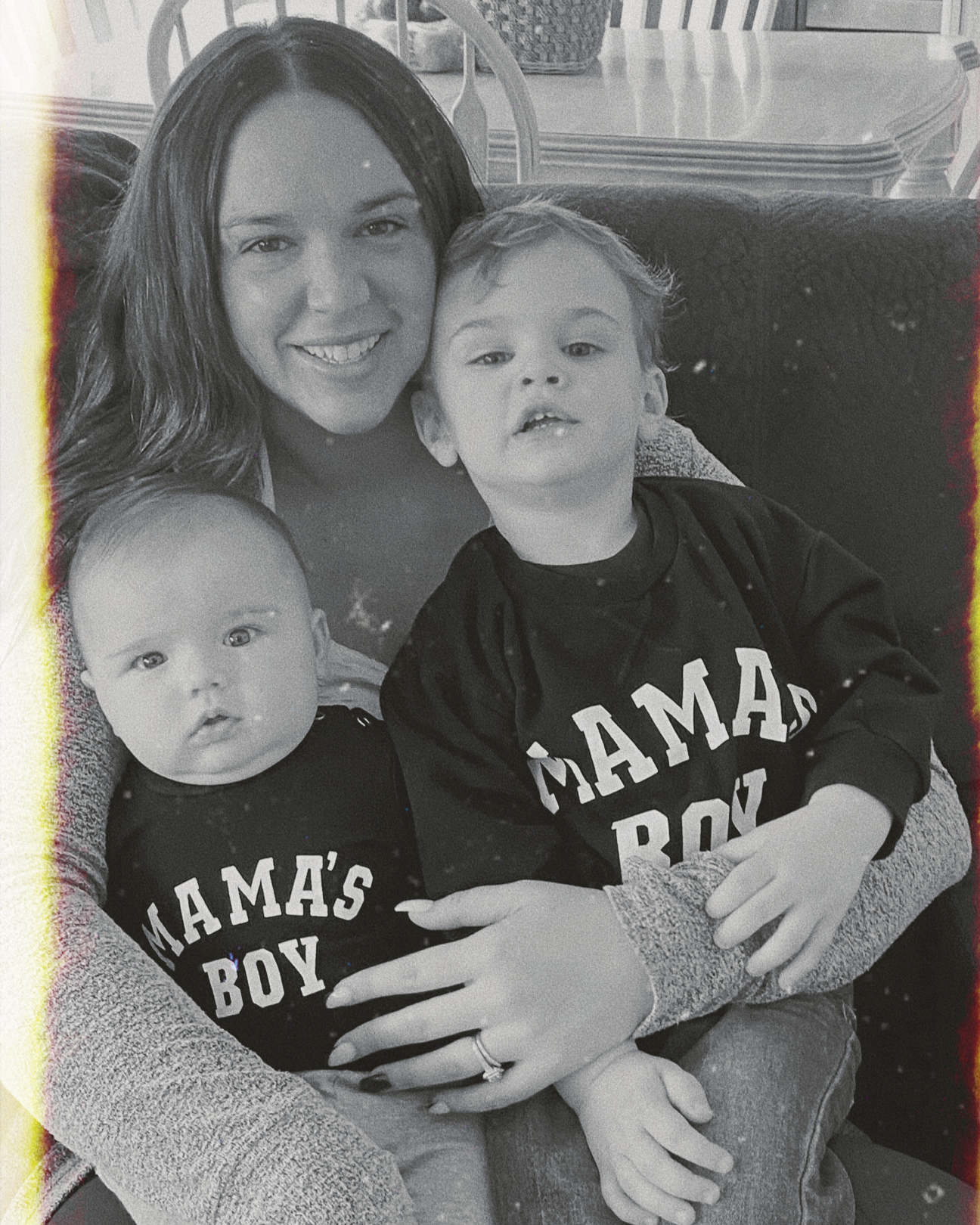
The six months before that day were some of the happiest of my life. I had landed my dream job. I had earned my MPH while pregnant and raising a two-year-old. We had just welcomed our second son, and my husband, Josh, had taken six weeks off so we could settle into life as a family of four together.
We knew what we were doing this time around. Yes, we were exhausted. Yes, life was chaotic. But there was a steadiness with it all. A comfort. A deep joy in living the life we had dreamed of and built together. I remember looking around during that season and thinking, “This is it. We did it.”
Maybe that is why the contrast between those two versions of life still feels impossible to explain — the sudden loss of safety, certainty, and joy.
On the night of Friday May 13th, we went to bed excited for the weekend ahead. The next morning, Josh woke up with a stomachache. Within twelve hours, I was calling an ambulance because the pain had become unbearable.
What followed was three months of continuous moments where I truly did not know if my husband was going to survive.
A small bowel obstruction spiraled into an inflamed and ruptured appendix. Then came emergency surgery. Then worsening obstruction. More surgeries. Sepsis. More complications. More fear.
He was the strongest man I knew. The invincible one. The Marine who felt unbreakable in every way. And suddenly I was watching him nearly die in front of me over and over and over again.
There are sensations from that time that still live inside my body.
The sound of the hospital monitors. The smell of hand sanitizer. The sound of pain that no medication could touch.
What made it worse was the medical gaslighting that caused his condition to deteriorate. Being told he was drug seeking, I was dramatic, and I just needed to trust them. Moments when I felt like I was fighting not only for his survival, but for people to believe us.
Every day felt impossible.
I would leave his hospital room at night wondering if it would be the last time I looked into his eyes. So much was said with just a look.
Then I would drive home, walk through the front door, and immediately shift into motherhood: Dinner. Bath. Bedtime stories. Bottles. Diapers. Pretending life was not actively collapsing around me because two tiny children still needed their mother to feel safe.
I did not have the luxury of falling apart. I was trying to keep my husband alive while also trying to keep life moving for our children.
And in the middle of all of that, people would still say things like: “You’re so strong.”
But strength is a strange thing. Because survival mode often looks admirable from the outside while actively destroying you from the inside.
The part people understood was the crisis. The surgeries. The hospital stays. The visible emergency.
What they did not understand was the aftermath.
When Josh eventually got better, the support slowly faded. Not because people didn’t care, but because once the immediate danger was gone, it was assumed the traumatic event was over.
But my body never got that message.
Something inside me fundamentally changed during that season.
I started living in a constant state of waiting for the other shoe to drop. I became hyperaware of everything. A stomach bug was no longer a stomach bug – it felt so much bigger.
At the same time, I became numb.
Those two things coexist inside me even now: hypervigilance and autopilot. Feeling everything too deeply while simultaneously disconnecting from myself just enough to keep functioning.
There are still moments where I feel like if I let myself fully touch what that time did to me, I might collapse underneath the weight of it.
So instead, I over-function. I push through. I compartmentalize. Until eventually it all spills over anyway in ways I have no control over.
The truth is, the trauma did not end when the hospital stays ended. It took up permanent residency in my nervous system.
And maybe one of the hardest parts to explain is that in many ways, I struggle more now than I did then.
Back then, survival was simple in the most primal sense of the word.
There was no room to process. No room to collapse. No room to feel the full weight of what was happening.
There was only:
Keep going.
Keep functioning.
Keep everyone alive.
At the time, I mistook survival for coping. Now, years later, I understand they are not the same thing.
Sometimes I find myself angry at how deeply stress still affects me now. Angry that small illnesses can still send my nervous system spiraling. Angry that while the stressor may have nothing to do with what happened then, my body still reacts the same way. Angry that I can understand mental well-being, resilience, nervous system regulation, and emotional health on such a deep level and still struggle so much to live it consistently myself.
There are moments where I think: How can I not handle life right now when I handled that?
But the truth is, I did not handle it. I survived it.
And survival often collects a debt the body eventually demands payment for.
I spent so much of my life before that being a chameleon. Becoming who I thought other people needed me to be. Achieving. Performing. Proving. Believing that if I worked hard enough, achieved enough, held everything together well enough, maybe I could finally feel secure inside myself.
Then life showed me, very brutally, that achievement cannot protect you from devastation.
There was no degree, accomplishment, or level of competence that could stop the person I loved most from almost dying.
And when the dust settled, I completely unraveled in the most agonizing sense of the word.
Depression. Anger. Numbness. Identity collapse. Disconnection from myself, from others, from motherhood, from life as I knew it.
I spent months convincing myself I was a bad mother because I had nothing left emotionally to give. I had poured every ounce of myself into survival for so long that afterward I felt hollowed out. A shell of who I was.
What began rebuilding me was not inspiration or positivity. It was not “finding the silver lining” or focusing on the gratitude that he was alive.
It was finally allowing someone to tell me that the messiness of what I was feeling was normal.
I sought professional help. She validated every emotion I was carrying – the fear, the resentment, the exhaustion, the grief, the numbness. She helped me understand that I was not broken like I felt. My nervous system was responding exactly as a nervous system does after prolonged trauma.
She saved my life simply by validating the emotions I had spent so long holding together that once they started surfacing, they no longer arrived in manageable pieces. That validation became the foundation underneath me. And slowly, the rebuilding began.
Not into who I was before. That version of me no longer existed. But into someone more honest.
That rebuilding eventually became the path that led me here.
To Wander Within.
To this work.
To the deep belief that well-being is not about perfection, positivity, or performance.
It is about understanding the conditions beneath the signal.
Because so many of us are walking around believing our reactions to life are personal failures instead of recognizing the stories our bodies are still carrying.
This work was never born from me believing I have everything figured out. It was born from me trying to understand what lived inside me after survival.
What still lives inside me.
What makes trauma especially disorienting is that it does not only live in memory.
It lives in the body. In reactions. In vigilance. In the way your nervous system learns to anticipate danger long after the danger has passed.
Sometimes our oldest son will reference memories from that time. Small things I never realized he retained. Moments that remind me his nervous system absorbed pieces of those years too. At two-years-old, the trauma did not spare his tiny mind and body.
Children may not understand the complexity of trauma, but they understand the feeling of it. And there is profound grief in realizing that survival leaves fingerprints on an entire family.
I still feel stress more deeply than I used to.
I still fight the urge to over-function.
I still oscillate between hyperawareness and emotional shutdown.
I still struggle to practice the very things I know are helpful.
But I also understand now that healing is not becoming untouched by what happened to you.
Healing is learning how to remain in relationship with yourself after it.
Not perfectly. Not linearly. Not beautifully all the time.
Just honestly.
And maybe that honesty is where healing actually begins.